Due to forecasted storms, free sand for sandbags is now available on a first-come, first-serve basis at nine City of Phoenix Parks.
First-Time Host Arizona Delivers NCAA Women's Final Four With Sellout Crowds and Record-Setting Fan Engagement
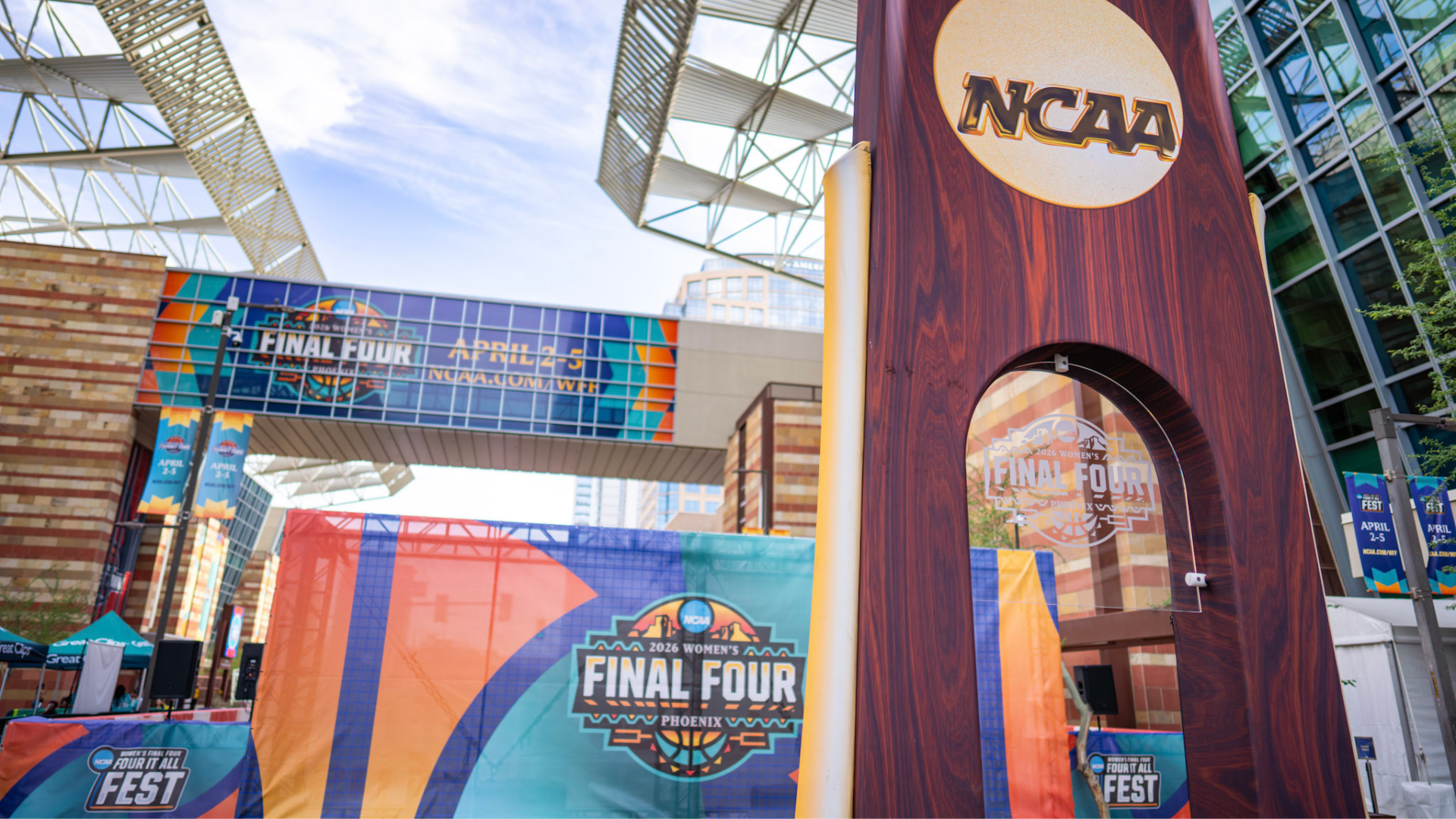
Championship week brought tens of thousands to downtown Phoenix for sold-out games, free fan events and community impact initiatives.
In its debut as host of the NCAA Women’s Final Four, Arizona welcomed four days of championship basketball, sold-out crowds, free fan experiences and community-centered programming that brought tens of thousands to the Valley April 2-5.
The 2026 NCAA Women’s Final Four transformed downtown Phoenix into the center of the women’s basketball universe, with the national semifinals and national championship at Mortgage Matchup Center alongside a full slate of free events for all ages.
Championship week drew 15,856 fans to the national semifinals, 15,856 to the national championship and 360,823 across games and fan events throughout downtown Phoenix.
The excitement extended far beyond Phoenix, with the 2026 Women’s Final Four delivering some of the most-watched games in championship history. The national championship game drew 9.9 million viewers – the third most-watched Women’s NCAA Championship ever on ESPN networks and up 15% year-over-year – while the national semifinals averaged 5.4 million and 5 million viewers, posting significant year-over-year growth.
“We are pleased with how Phoenix hosted its first Women’s Final Four,” said Lynn Holzman, NCAA vice president of women’s basketball. “Phoenix delivered an outstanding championship marked by incredible energy, strong fan engagement and a meaningful impact throughout the community. We are deeply grateful to Arizona State University, the Mortgage Matchup Center, the Phoenix Final Four Local Organizing Committee and our many partners for making this Women’s Final Four such a memorable experience.”
Beyond the games, fans attended a wide range of free events throughout downtown Phoenix, including: Tourney Town presented by Capital One (25,610), Four It All Fest (35,036), Super Saturday Practice presented by Samsung Galaxy (5,079), the Super Saturday Concert presented by AT&T (10,212), and Bounce presented by GEICO (3,000). These events delivered historic engagement, with Tourney Town seeing its highest attendance since 2015, while both Four It All Fest and the Super Saturday Concert set new all-time attendance records.
“Phoenix was proud to provide the stage for one of the biggest championships in women’s sports and to welcome fans from across the world for such a special week, proving once again why we are Championship Valley,” Phoenix Mayor Kate Gallego said. “The Women’s Final Four brought incredible energy to downtown, showcased our city on a national stage, and reflected the dedication and pride we take in hosting world-class events.”
The week also highlighted the Women’s Final Four’s broader community impact in Arizona. Read to the Final Four, presented by Helios Education Foundation, culminated during championship week after engaging third graders across Arizona in a statewide reading competition. Across 191 schools, 12,156 students logged more than 21.4 million minutes read – the equivalent of more than 357,000 hours or nearly 41 years of reading time.
The 2026 NCAA Women’s Final Four Legacy Project presented by Dove transformed the Washington Activity Center in Phoenix’s Alhambra Village, creating upgraded spaces to gather, learn and play for the 18,000 community members served each year.
Championship week also underscored a strong commitment to sustainability. Across 42 recovery efforts, event materials were diverted from landfills and redirected back into the community – avoiding an estimated 38.1 metric tons of carbon emissions, the equivalent of growing more than 600 trees for 10 years or saving over 5,000 gallons of gasoline.
“Hosting Arizona’s first Women’s Final Four was a tremendous honor, and we’re incredibly proud of how the Valley showed up for this moment,” said Jay Parry, CEO of the Phoenix Final Four Local Organizing Committee. “Thank you to the NCAA for entrusting us with this premier event. When we bring major events to Arizona, our goal is to create lasting value for our communities, and we believe this championship did exactly that.”
Arizona’s first Women’s Final Four was delivered through a collaboration among the NCAA, Arizona State University as host institution, Mortgage Matchup Center as the host venue, the City of Phoenix, the Phoenix Final Four Local Organizing Committee and countless public and private partners across the region. The event was also supported by 867 volunteers and covered by 1,280 credentialed media members (highest total ever).
2026 NCAA WOMEN’S FINAL FOUR BY THE NUMBERS
- National Championship Game broadcast viewers: 9.9M (third most-watched Women’s NCAA Championship ever on ESPN networks, up 15% YOY)
- Semifinal Game 1 broadcast viewers: 5.4M (up 57% YOY)
- Semifinal Game 2 broadcast viewers: 5M (up 19% YOY)
- Countries and Territories where game was distributed: 227
- National semifinals attendance: 15,856
- National championship attendance: 15,856
- Full Tournament: 360,823 (third most-attended all time)
- Tourney Town attendance: 25,610 (highest overall attendance since 2015)
- Four It All Fest attendance: 35,036 (record attendance)
- Super Saturday Practice attendance: 5,079
- Super Saturday Concert attendance: 10,212 (record attendance, max capacity)
- Bounce attendance: 3,000 (max capacity)
- Read to the Final Four minutes read: 21.4 million across 191 schools & 12,156 students
- Volunteers: 867
- Sustainability: 38.1 metric tons of carbon emissions avoided, the equivalent of growing more than 600 trees for 10 years
- Credentialed media: 1,280 (highest total ever)
- States represented: 41
- Countries represented: 7
A full economic impact report produced in partnership with Arizona State University’s Seidman Research Institute will be released later this year.